The Shah


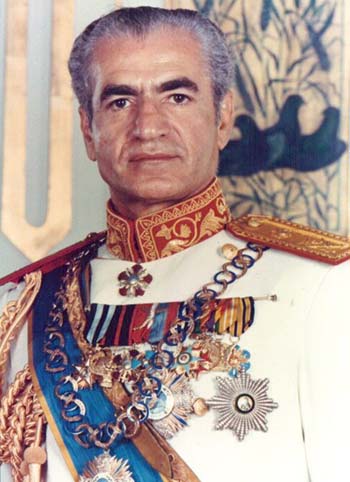
The title of Shah was born with the beginnings of the Pahlavi Dynasty in 1877, after acquiring command of a large force of Cossacks, Pahlavi expelled the Soviet troops and went through a coup d'etat against the current ruler, Ahmad Shah, to secure the country. (PAHLAVI, Riza Shah) By choosing the title of "Shah" to be the ruler's title, he sought to emanate Cyrus II the Great, who ruled Persia from 559 BC to 529 BC. (Shah Definition) The most recent Shah, Mohammad Reza Pahlavi was deposed in 1979 after a successful revolution headed by Ayatollah Khomeini. He had a very progressive stance and made many efforts to Westernize the nation of Iran. (PAHLAVI, Riza Shah)

The Iranian Revolution


In 1978, the Middle Eastern country of Iran was in a state of turmoil. Dozens of strikes had broken out, crippling the nation's economy. Shortly after in 1979, the Shah departed from Iran on an indefinite vacation, from which he never returned to his home country. Behind he left in charge Prime Minister Bakhtier to quell the uprising, however, he was unable too. When it became known that Ayatollah Khomeini, the elderly holy man who had set the entire revolution in motion was preparing to end his exile and return to Iran, Bakhtier closed Tehran Airport. The airport, however, reopened several days later after a severe spike in strikes forced the government's hand. Once Ayatollah came back to Iran, he rose quickly to power and became the leader of the new, theocratic Iran. (Revolution)

http://www.youtube.com/watch?v=kY0ixG94cHE

Recent Events In Iran


The Big test for Iranian democracy!

President elections were coming across to this time. Iran is one of the most democratic country in the Middle East, according to the views taking place . On 12 June, President Mahmoud Ahmadinejad was challenged by three contenders: Mir-Hossein Mousavi, Mehdi Karroubi, and Mohsen Rezai. (Leyne).And the election of President Mohammad Khatami in 1997, and of President Ahmadinejad in 2005, were both unexpected. (Leyne). This election was mixed in between encouraged, distant leader, and surprise results. For the distant leader deals with the parliament, which is know as the “ Majlis” that has a speaker who is overthrown with his words of wisdom: Ali Larijani. (Leyne).


Islam

The nation of Islam was founded on the basis of peace. The flag of Islam has the symbols of the sun, moon, and the stars which represent the universe. The people of Islam have always been taught that family is the back bone of society, to respect the laws of the land, and to always practice good manners. ("A Brief History") Monotheism, the belief in only one God, is central to Islam. They believe the ultimate purpose of humanity is to be in the "serivce of God" which is to worship him alone and to construct an ethical social order free from corruptions. The strength of family is very important in the Islamic community. Muslims, the followers of Islam, believe in Allah(God) and that Muhammed is His Prophet. (Royal Embassy of Saudi) The fundamental sources of Islamic policy and practice are the Koran and the Sunna. ("Islam") Muslims journey to Saudi Arabia where the Ka'abah, the most sacred shrine, is located in the Holy Mosque there in which they pray five times a day. (Royal Embassy of Saudi)

History Of Iran

Arab Muslim armies began their conquest of whats called today as Iran in ad 636 after the fall of Persia. In the 9Th Century the Country began to split into their own empires. By the 10Th century the majority of Iranians were Muslims ("Iran"). In the 12Th Century a Mogul Invasion left the country devastated, following that came the Tamerlanes' conquest in the 14Th century ("About Iran"). The next major change was in the 16Th century with the Safavid dynasty, when economic times became better. They also created a powerful religious institution with thousands of preachers with different ranks dominating and controlling every aspect of the lives of ordinary citizens ("About Iran"). By the 19Th century the country began modernizing after century's of terrible leaders.

Women of Iran

During the Ancient Mesopotamian time, the roles and behavior of each sex was expressed in values, customs, laws, and social roles. A series of texts show how gradually men's superior legal and social status was created. Overall, men had more rights than women. Although high status women had more rights than ordinary men and women, lower class women still had many restrictions. They were put in forced labor camps and received fewer rations than men. If a woman was guilty of talking to a man disrespectfully, she would have her mouth crushed with a hot brick. Widowed women were also restricted to remarry. As time went on, the restrictions of women seemed to be coming to an end. Reforms helped improve women's legal and social standing in their own communities. By the 1960's family laws were partially reformed for the first time and women were given electoral rights. (Price)
http://www.youtube.com/watch?v=ChPB17rxbEQ

Culture of Iran

The culture in Iran has many different ways of expressing and showing their life styles.In Iran men and women have numerous different ways to dress on a daily basis and certain ways to wear there hair. They had whichever short or long hair; they got to choose their style. All men and women wore make-up and jewelry daily. In addition colored their skin and dressed elaborately and colorfully. ("Culture Of Iran").Not just women wore skirts for technique, but also men. But it did represent class plus status. Scented oils and ointments were used by this time to clean and soften the skin and mask the body odor. ("Culture Of Iran"). On occasions or other events, some people used a type of paint to color the face. Basically only rich individuals used natural resources to their bodies or in their hygiene. Sometimes these natural resources can be created for ointments, medicines, and other goods. In some cases, Iran cultures tend to use certain oils on their skin to gain protection.

History Of Persepolis


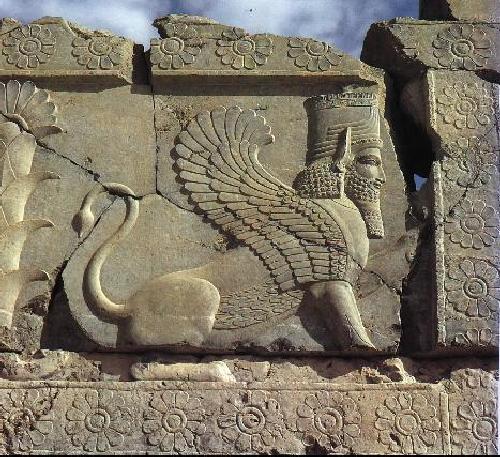
The Persian empire to the Greeks was called "City of the Persians". Persia was established in the late 6Th century B.C. ("Persepolis"). The empire was full of wealth and prospered greatly. They had 3 Main Buildings. The biggest was the Apadana (audience hall), which had monuments of when other nations brought gifts to the king. the next building which was the second biggest was the Throne Hall, where the king received nobles, dignitaries, and envoys bearing tribute ("Persepolis"). The next and last major building was the Treasury, which held booty taken from the nations conquered by the Persian Empire ("Persepolis"). The empire was brought Dwn about 2 centuries later, when Alexander the Great of Macedonia plundered Persepolis and then set it afire in 330 BC. Persepolis was left then abandoned and was rediscovered 1620("Persepolis").